
You Are Not Afraid of Death
The fear was installed before you could examine it. It does not survive inspection.

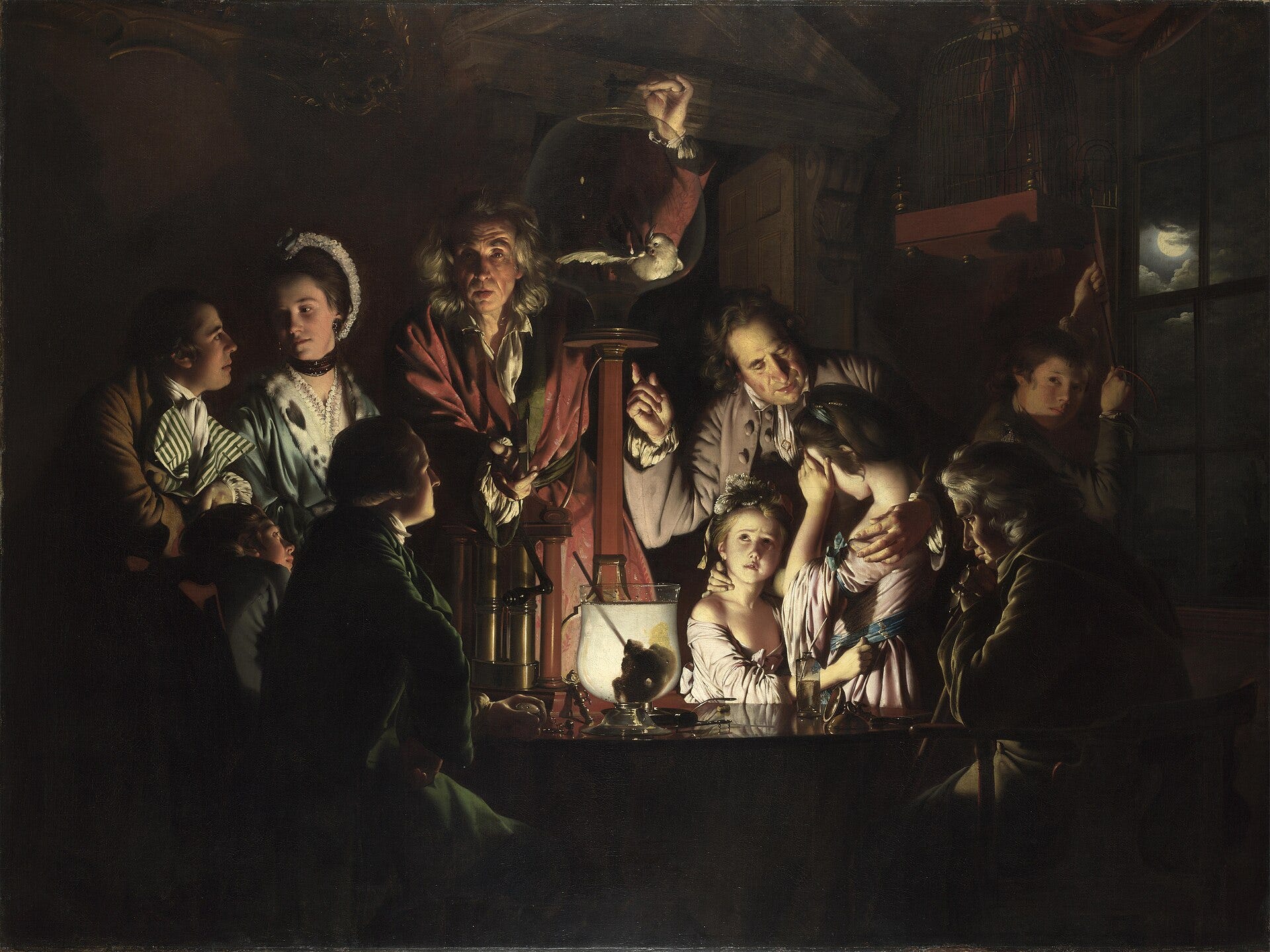
You are not afraid of death.
You have never met him.
You fear the unexamined concept you imagine death to be.
Anxiety, worry and overthinking are all ways you avoid embracing him.
Every other shape suffering takes serves the same purpose.
You have trained yourself to avoid looking at death by focusing on these shapes.
Your focus upon them grants them their power.
The shapes suffering takes are masks you fashion to cover his face to evade his eyes.
All suffering is a fear of death.
This is true whether or not you are aware of the fear.
The unresolved fear is created by an unexamined belief.
The belief that you are a separate being who was created by birth and who will be destroyed by death.
This belief was imposed. You were indoctrinated.
Brainwashed. In the way cult members appear brainwashed to you.
It was not something you worked out.
You were taught by society so early that you have never been able to assess the belief from a rational, unbiased perspective.
You are a baby. People name you. They tell you this name is yours.
Later, you are told that you control your body. That you are responsible for your actions.
You are congratulated for walking.
You are told you are responsible for regulating your emotions.
Then, that you are not only responsible for your actions and the regulation of your emotions, but also responsible for the regulation of the emotions of others.
Your actions and internal state affect how others feel, you are told, so you are responsible for others as well as yourself.
Then that you must work hard in school. You should try your best.
The questions of what you want to do when you grow up move over the years.
First they are a way adults amuse themselves, hearing your desires to be a princess or an astronaut.
Then they become advocacy for the import of selecting a respectable profession to specialise in.
As you grow from babe to child, you learn about death in the particular way it is revealed to you.
When the idea of death was shared, the concept of “you” — your name, your will, your responsibilities — had already been installed and in constant use.
The fear arrived pre-assembled, attached to the idea.
You never had a chance to examine it.
Everyone around you believed, brainwashed themselves in the same way.
Nobody inside a cult thinks they are in one.
Yours has billions of members.
Neuroscience is complicit in this paradigm.
Imagine I squeeze the juice out of a lemon into a glass. I pass you the glass.
I tell you to put the glass down. To close your eyes.
Now, imagine holding the glass close to your nose and smelling the lemon juice deeply.
Imagine drinking the juice. Swill it around your mouth before you swallow.
Your mouth waters for imaginary juice.
Why?
Neuroscientists work from the assumption that consciousness is produced by patterns of neural activity in your brain.
They would explain that since your consciousness is created by these patterns, a pattern was created which caused your brain to imagine drinking lemon juice.
You cannot choose to make your mouth water by directly willing it.
Feel free to try.
Yet your mouth will water every time you imagine drinking fresh lemon juice.
It will never learn the difference between drinking imaginary lemon juice and drinking freshly-squeezed lemon juice.
Why?
A neuroscientist would say for the brain, the two events are equivalents.
They are right, but their science obeys the indoctrination of the same cult.
They think consciousness is a personal quality: that the experience of consciousness for each individual is created by each brain.
So rather than pursue the investigation into why the brain never learns that the mouth does not need to water for imaginary lemon juice, they return to the indoctrination they know for certain: the brain is real, consciousness is created somehow by it, and one day in the future we will understand how this happens.
The taste of lemon appeared with no lemon.
The experience was complete, and the supposed physical world which they say forms reality was not consulted.
If experience arrives whole without the physical, then the confident description of the physical universe forming a brain forming neural activity forming experience already is exposed as a story.
No one has ever explained how neural activity becomes the experience of the taste of lemon.
No one can explain how you can read “notice the tingling sensation on the palms of your hands” and experience it now when a moment ago you were unaware of it.
No one can explain how the experience of love or disgust results from neurons firing in a certain way.
Not even the beginning of an explanation for any of this.
You will not find any neuroscientist who disagrees.
This is the gap Chalmers called the hard problem.
All the brain has ever been observed doing is correlating. There is much excellent evidence that the apparent localization of consciousness in an apparent individual is dependent on the brain. There is none that the brain produces it.
The dream does not prove there is a dreamer. Only that there is dreaming.
Neuroscience records the dream and insists the dreamer must exist and must be creating it.
I cannot resolve your fear of death for you. Nobody can but you.
Notice that the belief it rests on — that you were born and you will die — was installed before you could consider it.
The belief does not survive inspection.
Where was the taste of lemon at the start of this essay?
Nowhere.
Where was it when you were swilling imaginary juice?
Here.
Where will it be in an hour?
Nowhere or here.
Which came first: the chicken or the egg?
Neither.
When you dream of characters you don’t know and think they are real in your dreams, where do they go when you awaken?
Nowhere.
Where were they before you were asleep?
Nowhere.
Do you mourn their loss when you wake?
No.
Why?
I do not think they exist independently of the dream.
Characters dissolve. Locations and stories fade.
Every morning you lose these concepts, and you let them go.
The fear was never of death.
It was of the consequences that seemed so severe you never looked at death itself.
Look at what you are afraid to examine.
Look directly at it.
It does not survive the looking.
ALG
This post made me reflect the first time in my growing years I encounter death the very first time. What came up thru my childhood memory waw an accident that I saw from the closed look a man crushed head lying on the road. That experience stayed eith me and from that point I avoided seeing the accident victims who lost their lives. So definitely the death means the death of the body. Since my identification with the body was so strong that I feared death of the body. As the deeper understanding of reality kicked in, experiential impermanence became more relevant. The identification with the body loosens, who dies becomes more clear and this clarity makes all the difference as we live life and death in more integrated way.